Vietnam Gaming Market: An Overview of Vietnam's Gaming Market and Opportunities for Publishers
In 2025, Vietnam's mobile gaming market had roughly 54 million players and an estimated USD 825 million in revenue. But downloads alone no longer measure success: long-term value, local payments, localization, and player research now shape publishers' opportunities.
In this article⌄
The Vietnam Gaming Market is entering a stage of development that places greater emphasis on player quality and long-term value. In 2025, the Vietnam mobile gaming market had approximately 54 million players, with estimated revenue reaching USD 825 million, up 9.16% year-on-year.
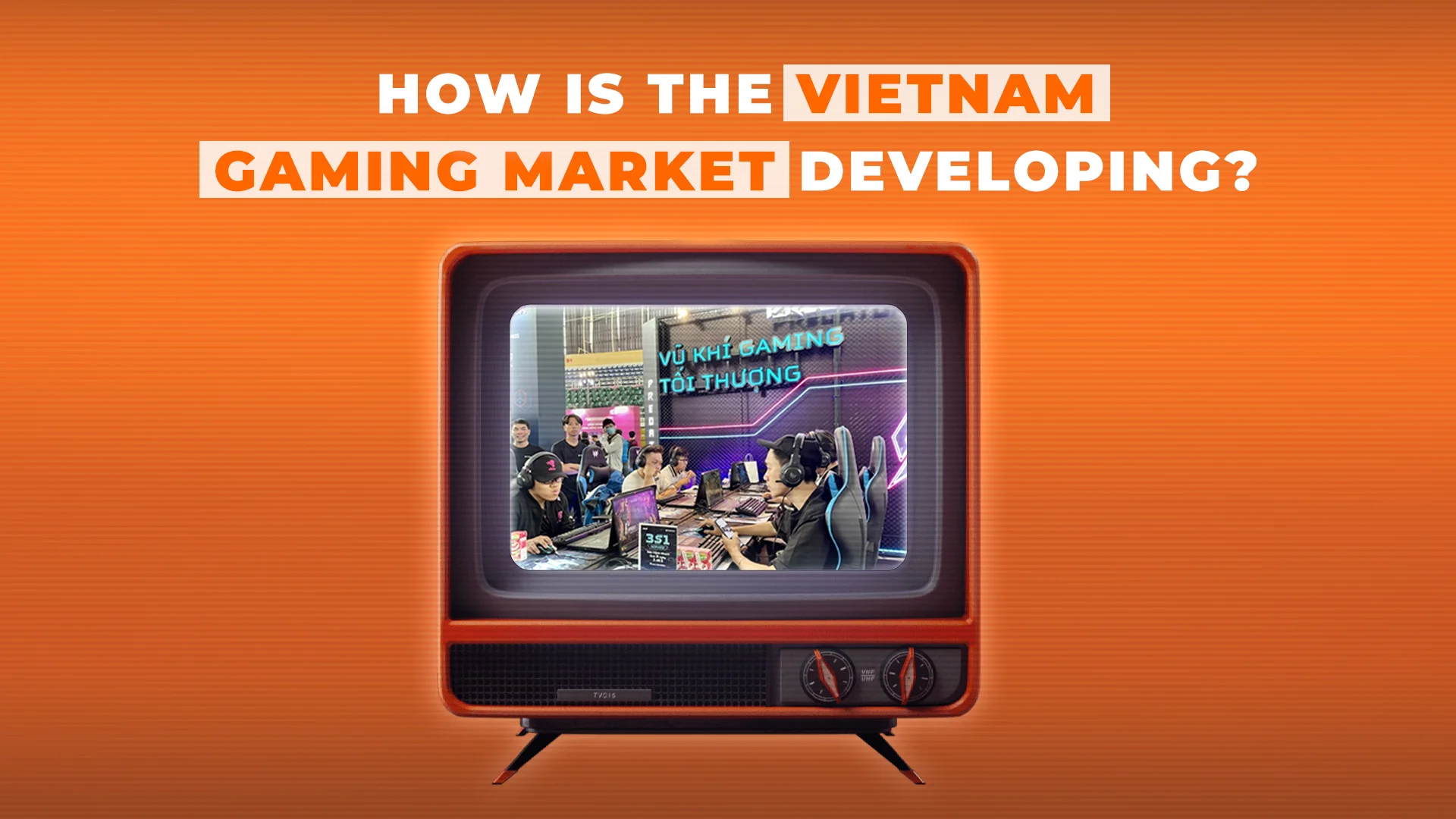
1. How Is the Vietnam Gaming Market Developing?
Large player base, but revenue requires a deeper look
Vietnam has a large gaming community, particularly in the mobile segment. According to Gamota's Vietnam Mobile Gaming Year-in-Review 2025, the Vietnam mobile gaming market reached approximately 54 million players in 2025, while estimated revenue reached USD 825 million, up 9.16% from 2024.
These figures show that Vietnam remains a market of interest for publishers looking to expand across Southeast Asia. However, the size of the player base alone cannot be used as the only indicator of market potential.
Gamota notes that there is a gap between the number of players and actual business performance in Vietnam, meaning publishers need to pay greater attention to user quality, retention, and monetization efficiency.
Therefore, when evaluating the Vietnam Gaming Market, businesses need to consider player scale, engagement, spending capacity, and player lifetime value together, rather than relying solely on download numbers.
High downloads do not mean business success
One of the notable changes in the Vietnamese market is that download numbers are increasingly insufficient to reflect the performance of a game.
Gamota reported that in 2025, the market had approximately 54 million players, but success was no longer measured simply by the number of downloads. The report highlights the gap between player volume and business performance and emphasizes the need for publishers to shift their focus toward real value and sustainable profitability.
This means a game can generate a large number of installs but still struggle if players do not continue playing or lack motivation to spend.
For the Vietnam Gaming Market, the important questions are therefore not only “How many players are there?” but also “Which player segments create value, and what keeps them engaged with the game?”
Long-term value is becoming a central focus
This shift can also be seen in the activities of major companies in the industry.
According to VNG's 2025 Annual Report, its Games & Entertainment segment generated VND 7.054 trillion in revenue, up 8%; total bookings reached VND 8.162 trillion, up 13%; while the paying-user rate increased from 3.7% to 4.6%.
VNG also reported that QAU for its Games segment decreased from 65.8 million to 57.3 million, while engagement and playtime among retained users improved. The company shifted its focus from user scale toward long-term player value and the Games-as-a-Service model.
This is an important signal for the Vietnam Gaming Market: user growth is no longer the only objective. Publishers need to build products capable of retaining players and generating revenue over the long term.
2. Trends Shaping the Vietnam Gaming Market

Games need to be operated as long-term services
A game does not end on launch day. Particularly for mobile games and products with strong community elements, publishers need to continuously update content, organize activities, support players, and maintain engagement.
VNG stated that in 2025, the company continued shifting toward the Games-as-a-Service model, focusing on games with longer lifecycles. Long-lifecycle games accounted for 46% of Games revenue in 2025.
This shows that post-launch operations are becoming increasingly important. A product intended to grow over the long term needs continued investment in content, community, player support, and retention, rather than concentrating the budget solely on the launch phase.
Local payments are becoming a part of the publishing equation
Payment infrastructure is also becoming a significant consideration for publishers entering Vietnam.
According to the **Vietnam Mobile Gaming Year-in-Review 2025**, cash flow in the mobile gaming market is increasingly moving through domestic payment ecosystems rather than relying entirely on international app stores. Gamota notes that this trend can help businesses optimize cash flow, while also creating higher requirements for operational capabilities and legal compliance.
Another Gamota analysis also emphasizes that foreign publishers entering Vietnam need to consider **licensing, local payments, and community operations**, rather than simply translating the game and running advertising campaigns.
Therefore, a publishing strategy needs to be prepared across multiple areas simultaneously: product, payments, customer support, community, and legal compliance.
Localization goes beyond language translation
Translating a game into Vietnamese does not mean that the game has been fully localized.
Vietnamese players have distinct characteristics in terms of behavior, content preferences, spending patterns, communities, and advertising consumption. Publishers therefore need to consider gameplay, events, communication content, creators, communities, and post-launch operations.
Effective localization needs to answer one key question: What makes this product relevant to Vietnamese players?
This is why player research can play an important role before launch. Instead of assuming that a strategy successful in another market will work in Vietnam in the same way, businesses can validate their assumptions through data and direct player feedback.
3. Opportunities for Publishers in the Vietnam Gaming Market

Vietnam remains a significant market for mobile games
With approximately 54 million mobile players and USD 825 million in revenue in 2025, Vietnam is large enough to attract the attention of international publishers.
However, the opportunity does not simply lie in bringing as many games into the market as possible. Competition for attention is increasing, while players have more choices in both games and entertainment content.
A product seeking to establish a position in the market needs to clearly identify its relevant player segments, why they choose the game, and what keeps them engaged.
For international publishers, this is where market research becomes an important step before making investment decisions.
Player research helps us understand the market more deeply
Market data can tell us how many players Vietnam has or how much revenue the market generates, but it cannot answer every question about player motivations and behavior.
For example, data may show that a particular game genre is performing well. However, before deciding whether to invest in that genre, publishers need to understand whether players choose those games because of gameplay, visuals, IP, creators, communities, or other factors.
This is where qualitative and quantitative research can complement market data.
With experience in player research, ANBU can support publishers through surveys, interviews, and insight analysis to understand the needs, behaviors, and feedback of Vietnamese gamers.
Instead of simply asking “What do Vietnamese players play?”, research should go deeper into “Why do they play, why do they leave, and what makes them willing to stay with a game?”
These insights can be used to develop product positioning, identify target player segments, refine marketing messages, and optimize post-launch operations.
The gaming ecosystem is expanding beyond games
The Vietnam Gaming Market is not limited to games and publishers. Esports, creators, communities, events, and brands from outside the gaming industry are becoming increasingly visible components of the ecosystem.
Vietnam GameVerse 2026 is one example. The event attracted 35,000 attendees over two days and was held across a 40,000-square-meter venue with more than 100 booths.
The event brought together various groups, including gamers, publishers, developers, esports organizations, technology companies, and young cultural communities.
Notably, Vietnam GameVerse 2026 also featured 87 athletes from 11 countries participating in the SEA Esports Nations Cup, demonstrating how gaming in Vietnam is developing stronger connections with the regional esports ecosystem.
This creates additional opportunities for publishers to build communities and partnerships rather than competing solely through paid advertising.
4. How Can Publishers Approach the Vietnam Gaming Market Effectively?

Evaluate the market before launch
Before bringing a game to Vietnam, publishers need to answer several fundamental questions:
- Who is the target player segment?
- Is the game genre aligned with current market demand?
- Who are the direct and indirect competitors?
- Through which channels do players discover games?
- How willing is the target audience to spend?
- What aspects of the game need to be localized?
- Does the current publishing and operation model meet the requirements in Vietnam?
These questions help businesses evaluate the market before allocating marketing budgets.
In particular, publishers should not rely solely on overall market figures. A market with 54 million mobile players does not mean that all of them are suitable for the same game.
Prepare for legal, payment, and operations
The Vietnam Gaming Market has specific requirements for game publishing. According to Gamota, the game classification G1, G2, G3, or G4, together with the publisher's licensing status and the completeness of its documentation, can directly affect when a game becomes eligible for release.
If a game is relatively stable and the studio works with a local publisher that already has the necessary licenses or certifications, Gamota provides 8-12 weeks as a reference planning timeframe. However, this is not a fixed legal deadline; products requiring content or technical changes, or those starting the licensing process from scratch, may take longer.
Therefore, a market-entry plan should be prepared across multiple areas simultaneously: product, legal compliance, payments, localization, marketing, and community operations.
Turn data into strategy
Data only creates value when it helps businesses make decisions.
A market report can reveal the size of the player base, but publishers still need to determine which player segments are relevant to their product. Revenue data can show that a market is growing, but player research can help explain what drives spending behavior.
This is also where ANBU can support publishers: connecting market data with player insights to provide a foundation for product, marketing, and publishing strategy decisions.
Player numbers and revenue demonstrate that Vietnam is a market worth considering. However, publishers need to separately evaluate product-market fit, player segments, monetization models, and operational requirements before investing.
Research helps businesses understand their target player segments, needs, motivations, spending behavior, and the factors influencing their decision to continue using a game. This gives publishers a stronger basis for adjusting their products and marketing strategies.
Publishers looking to conduct market research can contact ANBU. ANBU supports market research, player research, insight analysis, and community behavior analysis, helping publishers better evaluate the Vietnam Gaming Market and develop appropriate publishing and marketing strategies.

Need to conduct gaming market research? Contact ANBU to gain player insights and develop a tailored strategy.
💬 Reader Discussion
Share your perspective, questions, or campaign experience.
Đang tải bình luận...