
Back to blog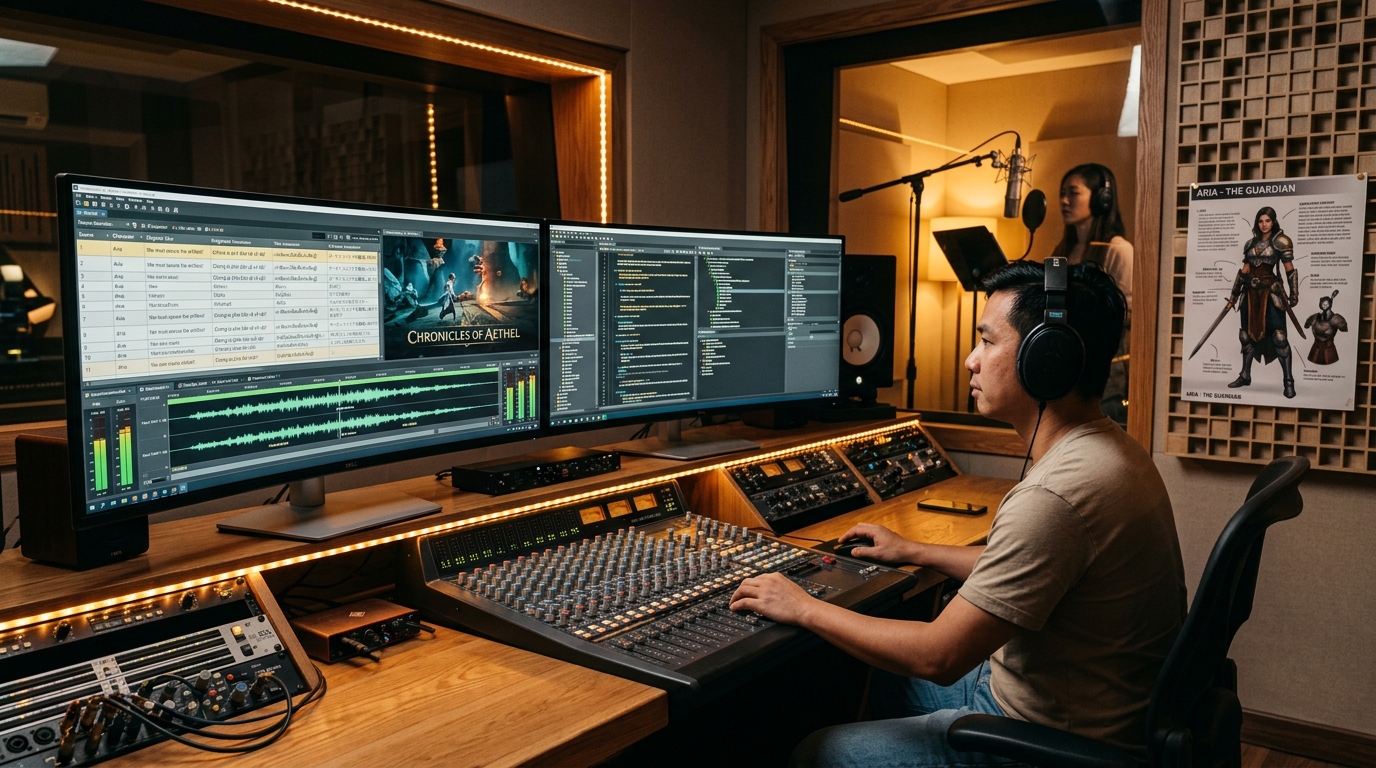
Gaming Market·6 min read·Written by ANBU Team
Mobile Game Localization in Vietnam: Bridging Language and Gamer Culture
Localization goes far beyond word-for-word translation; it embeds authentic gamer slang, cultural pronouns, and competitive PK culture. A practical LQA workflow to prevent UI overflow and contextual mismatches.
In this article⌄
Vietnamese gamers represent one of the most discerning demographics in Southeast Asia regarding linguistic nuance. An international masterpiece with breathtaking visuals will instantly receive 1-star store reviews and be labeled as an insulting cash-grab if it relies on crude machine translations.
1. Three Layers of Deep Game Localization
- Gaming Jargon & Vernacular: Incorporating familiar Vietnamese gamer idioms rather than sterile academic phrasing.
- Pronouns & Narrative Immersion: Navigating complex Vietnamese cultural honorifics to match martial arts lore or sci-fi hierarchy, which has major influence on emotional roleplaying depth.
- Technical LQA & UI Constraints: Vietnamese text expands 25 - 35% longer than English. Rigorous LQA ensures diacritics render perfectly without clipping button boundaries.
2. Four-Stage LQA (Linguistic Quality Assurance) Protocol
Professional game localization happens on live game builds, not static spreadsheets, following a strict 4-stage protocol:
- Stage 1: Terminology Glossary & Style Guide: Standardizing character names, lore locations, skill abilities, and pronoun matrices matching the narrative genre.
- Stage 2: In-Context Translation: Translating with real-time character limit previews to manage Vietnamese text expansion.
- Stage 3: On-Device LQA: Playtesting 100% of dungeons, gacha interfaces, quest logs, and store menus to eliminate UI overflows and clipping.
- Stage 4: Localized Voice Acting: Casting authentic voice actors renowned in the local gaming space to bring combat battle cries and cinematic cutscenes to life.
💬 Reader Discussion
Share your perspective, questions, or campaign experience.
Đang tải bình luận...