Mobile Game Promotion: How to Effectively Promote Mobile Games in Vietnam
Game Mobile Promotion, or simply put, promoting mobile games, is considered a crucial part of bringing games to players. However, game promotion today is no longer limited to running ads to increase downloads.

In this article⌄
Game Mobile Promotion, or simply put, promoting mobile games, is considered a crucial part of bringing games to players. However, game promotion today is no longer limited to running ads to increase downloads. With players having so many options and becoming increasingly immune to familiar messages, publishers need to find ways to make their games stand out, get played, and most importantly, keep players coming back.
This becomes even clearer when looking at the Vietnamese market. In the first half of 2026, mobile games in Vietnam reached 76.5 million downloads, down 9.7% compared to the same period in 2025. Despite the decline in downloads, revenue increased by 7.5% to $177 million. Vietnam also accounted for 18.3% of total mobile game downloads in Southeast Asia, but only 10.6% of the region’s in-game revenue.
These figures indicate that the market is not lacking in players, but the challenge of attracting the right audience and generating value from players is becoming increasingly important. Therefore, an effective mobile game marketing strategy must go beyond the goal of increasing downloads and focus on player experience, retention, and long-term value.
What is Game Mobile Promotion?
Game Mobile Promotion is more than just running ads
Game Mobile Promotion can be understood as the entire process of bringing a game closer to its target audience from building awareness and sparking interest to getting players to download the game and remain engaged with it.
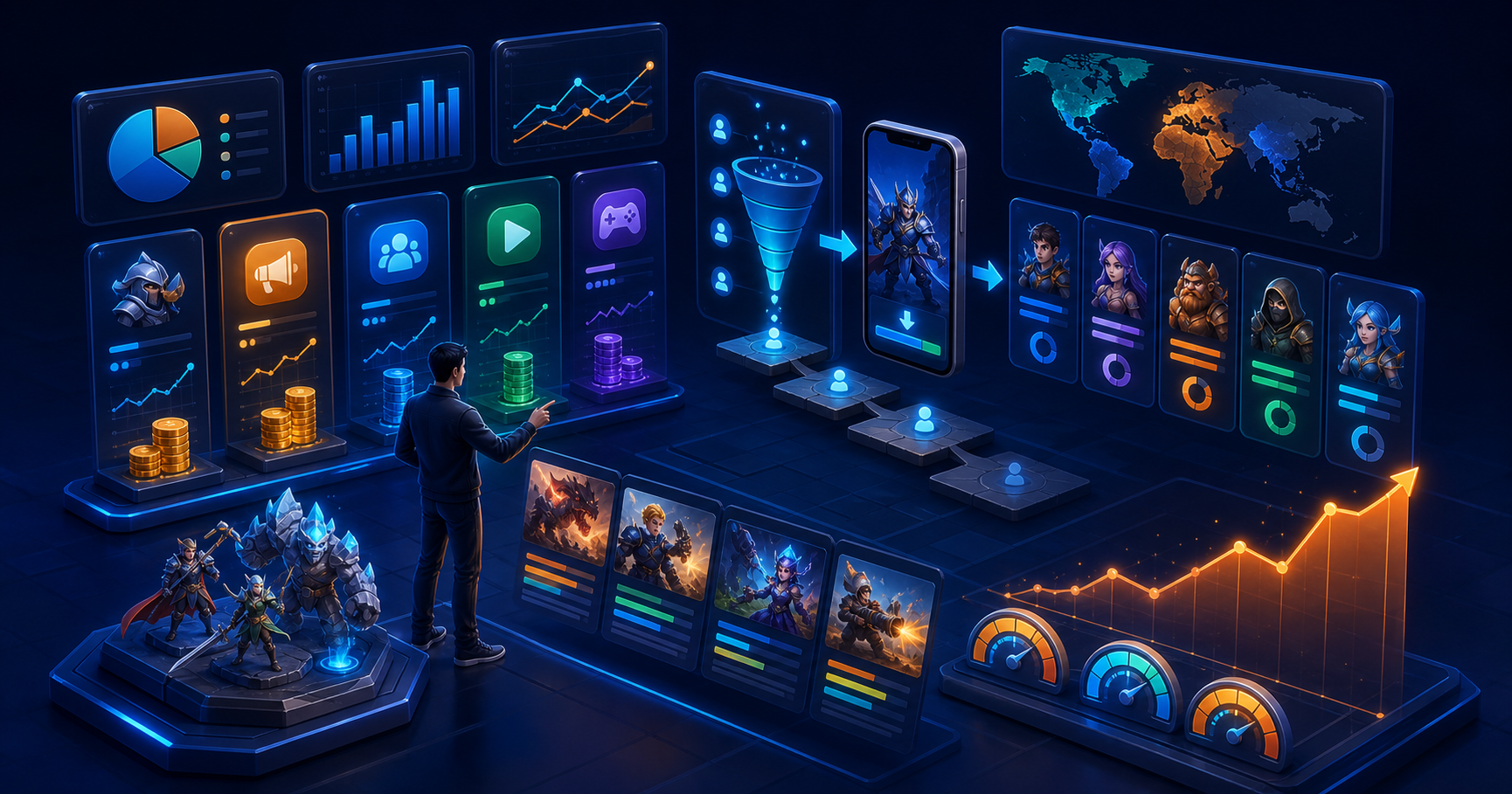
In practice, Game Mobile Promotion can occur at many different touchpoints. Players might come across a short video on TikTok, see an ad on Facebook, watch a gameplay video on YouTube, read a review on a Fanpage, or look for community reviews before deciding to download the game.
Therefore, if publishers focus solely on paid advertising while neglecting the content that follows, they will struggle to build a complete user journey. An ad may capture a player’s attention for a few seconds, but it is the content on social media, the experience during the game download, and community engagement that ultimately determine whether they continue playing.
Why is Game Mobile Promotion becoming increasingly competitive?
The gaming market is competing for a resource that is becoming increasingly difficult to secure: players’ attention. According to AppsFlyer’s “State of Gaming for Marketers 2026” report, global spending on player acquisition reached approximately $25 billion in 2025, a 3.8% increase from the previous year. The report is based on data from approximately 9,600 gaming apps and 24.8 billion installs, including 14.1 billion paid installs.
At the same time, the number of ads has also surged. In 2025, game ad impressions increased by 20%, while the percentage of installs coming from ads rose by about 10%. High-spending game advertisers also create thousands of content variations each quarter to identify which ads are more effective at attracting players.
This means that simply using a single ad template and continuously increasing the budget is no longer a sustainable approach. When players see too much similar content, they are more likely to ignore the ads. To stand out, games need their own unique storytelling approach and, most importantly, must show players the actual experience the product delivers.
How is the Vietnamese market changing?
Changes in the Vietnamese market also show that the number of players is not the only factor determining growth opportunities.
In the first six months of 2026, although mobile game downloads in Vietnam fell by 9.7%, revenue rose by 7.5%. Monthly revenue in the first half of the year remained at approximately $28.7–30.6 million, while June recorded 14 million downloads, the highest figure for the first half of the year.
The gap between download growth and revenue growth indicates that higher-value players are becoming a key focus. For publishers, the goal is no longer simply to reach as many people as possible, but to find the audience that is truly a good fit for the product.
This is precisely where mobile game marketing needs to shift: from chasing download numbers to attracting the right players and optimizing their value throughout their gaming journey.
How to Build an Effective Game Mobile Promotion Strategy

Understand Your Players Before Creating Content
A good marketing campaign shouldn’t start with the question “What content should we post today?”, but rather with identifying the players you want to reach.
An RPG might attract players through its character system, storyline, or team-building mechanics. Meanwhile, a shooter might appeal through its competitive nature, fast-paced gameplay, and player skill. If the same message is used for both, the content will struggle to feel relevant.
Therefore, before creating content, the marketing team needs to understand what their target players are typically interested in, what games they’re currently playing, and the reasons they choose a new game. Only then can advertising messages address players’ specific interests directly, rather than trying to showcase every feature of the product in a single piece of content.
Let players see the real experience
One of the most noticeable changes in mobile game marketing is that content is increasingly focused on actual gameplay.
Instead of relying solely on character images or taglines like “epic RPG” or “thrilling action game”, videos can show viewers a battle, a special ability, how to level up a character, or an interesting in-game scenario.
This approach is particularly well-suited for short-form content on social media. A 15–30 second video can highlight a moment compelling enough to make viewers want to learn more about the game.
This is also a suitable approach for creating content without relying too heavily on real people. Using the game’s existing resources, the team can edit and assemble various types of content, such as character introductions, skill comparisons, tutorials for new players, or memorable moments from matches.
According to AppsFlyer, game publishers with advertising spend exceeding $7 million per quarter create an average of 2,743 content variations per quarter. This figure indicates that major publishers are dedicating significant resources to content experimentation rather than relying on a single ad template.
Combining ads with social media content
Paid advertising can help a game reach players quickly, but it’s not always enough to convince them to download the game.
Someone who sees an ad on TikTok may not make a decision right away. They might visit the Fanpage to watch more videos, look up information about the characters, read comments, or see how other players rate the game.
Therefore, ads and organic content should be designed as two parts of a single journey. Ads grab attention, social media content provides additional information, and the community gives players more reasons to trust and engage.
This approach also helps reduce reliance on paid advertising. When organic content is shared or discussed by players, the game can reach new players without having to pay for each impression.
Experiment with Different Storytelling Approaches Instead of Just Changing Images
A common mistake in game promotion is assuming that simply changing an image or headline creates new content. In reality, the same game asset can be presented in many different ways.
One video might focus on a character’s strengths, while another highlights an unexpected situation during a battle. Content aimed at new players might explain how to get started, while content for existing players might focus on updates or new features.
AppsFlyer reports that the top 2% of the most effective in-game ad content accounts for 53% of the total ad budget in their research data. This shows that finding the right content has a significant impact on how the budget is allocated.
Therefore, instead of trying to find the perfect formula right from the start, the marketing team should continuously test, measure, and keep the approaches that truly resonate with players.
From Downloads to Player Retention
High download numbers do not necessarily mean an effective campaign
Downloads are the most visible result of a game promotion campaign, but they are not the only metric that matters. If an ad drives a large number of installs but most players don’t start their first game or leave the game shortly afterward, the ad budget may still be wasted.
More importantly, it is the quality of the players being acquired. Do they continue playing? Do they return after a few days? Do they participate in events? Do they purchase in-game items? Or do they recommend the game to other players? These questions help publishers see the true value of a campaign rather than relying solely on download numbers.
The Early Days Are Especially Important
Marketing efforts shouldn’t end the moment a player clicks the “Download” button. That’s just the beginning of the process of building a long-term player base.
AppsFlyer data on in-app monetization in 2026 shows that in-app purchase revenue continues to grow, with revenue from this channel increasing by 29% in Q1 2026 compared to the same period last year. The report also indicates that optimizing post-install user value is becoming increasingly important for the app business model.
This places greater demands on promotional efforts. Players need clear enough guidance to understand how to play, have a reason to complete their initial experiences, and recognize the value of returning to the game. If an ad promises an engaging experience but the onboarding process is complicated or falls far short of expectations, the likelihood of players churning is very high.
The Community Helps Extend a Game’s Lifecycle
Once players have become engaged with the game, the community plays a vital role in sustaining their interest. A player might share character-building strategies, post achievements, guide newcomers, or create videos about an interesting in-game situation. This content not only serves the existing community but also has the potential to reach people who are not yet familiar with the game. Therefore, rather than viewing players merely as recipients of advertisements, publishers can create opportunities for them to become an integral part of the game’s marketing efforts.
The more actively the community shares, the more natural touchpoints the game gains. This creates a relatively sustainable cycle: players experience the game, share content, attract new players, and continue to spark new discussions.
Advertising must accurately reflect the in-game experience
A campaign can generate millions of views but still be ineffective if the ad content does not accurately reflect the product.
Today’s players can easily search for information and see what others’ experiences are like. If an ad shows one kind of gameplay but the actual product differs too greatly, disappointment will set in immediately after installation.
Therefore, promotional content should be engaging but must also be honest. Key features should be clearly highlighted, and the expectations set by the ad must align with what players actually receive.
Measuring to Optimize Mobile Game Marketing
Don’t just look at the cost per download
Cost per download remains an important metric, but relying solely on it to evaluate a campaign isn’t enough.
One ad source may drive downloads at a low cost, but players may churn very quickly. Conversely, another source may have a higher cost but attract a player base with better retention rates and higher spending potential.
Therefore, evaluation should be conducted throughout the entire player journey. From ad impressions, clicks, and installs to the start of gameplay, retention, and revenue generation, each stage provides insights into the quality of the campaign.
This perspective helps businesses answer a more important question: Does the cost of acquiring a player align with the value they generate?
Data should be used to adjust content
Once a campaign is running, data shouldn’t just be compiled at the end of the month for reporting purposes. These figures need to be used to adjust content and budgets right in the middle of the campaign.
If a video has a high view rate but few installs, the issue may lie with the call to action or the information users see after clicking. If installs are strong but players quickly leave the game, the initial user experience should be reevaluated rather than simply increasing the budget.
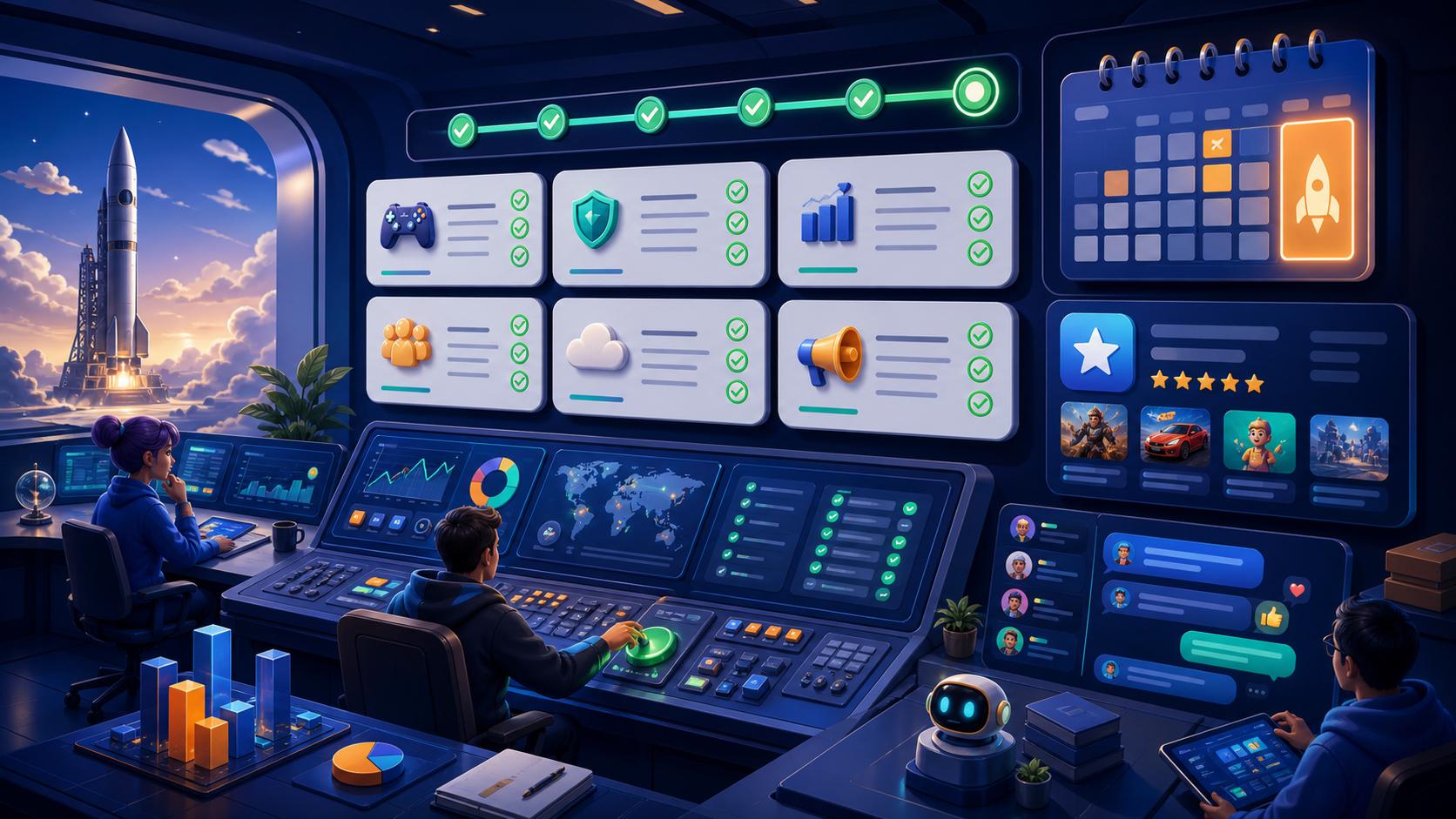
AppsFlyer reports in 2025 that game marketing increasingly relied on the ability to process large volumes of data. In the 2026 report, 46% of queries to game marketers’ AI assistants focused on reporting and performance analysis, indicating a sharp rise in the need to read and process data as marketing activities become more complex.
This does not mean that data can completely replace a marketer’s decision-making. On the contrary, data helps the team better understand what is happening so they can make informed decisions.
Track genre trends to identify new opportunities
Mobile game advertising must also keep pace with changes in player preferences. In Vietnam, data from the first half of 2026 shows that certain genres are experiencing notable growth.
Downloads of sports simulation games surged by 242.2%, shooter games by 181%, and casual role-playing games by 21.4% compared to the same period last year. These are the only three genres among the top 10 analyzed that recorded growth in downloads. Notably, revenue from shooter games soared by 579.4%.
These figures do not mean that every publisher should rush to follow the genres that are currently growing. The key is to look at trends to understand what players are interested in and see where your product intersects with those needs.
A game with a strong product but marketing that doesn’t align with player needs will struggle to gain a competitive edge. Conversely, when promotional messages resonate with what players care about, the chances of attracting and retaining them are significantly improved.
Mobile game marketing should focus on long-term growth
Overall, mobile game marketing efforts should be implemented as a continuous journey rather than divided into disjointed campaigns.
Before the game’s release, content should build awareness and spark curiosity. Upon launch, targeted marketing efforts help players understand the product and begin their experience. Afterward, updates, events, new characters, and community activities continue to provide reasons for players to return.
With global gaming ad spending projected to reach approximately $25 billion by 2025, while ad impressions are expected to increase by 20%, competing solely on budget is becoming increasingly difficult.
The competitive advantage, therefore, can come from understanding players, creating relevant content, and using data to continuously improve. This is also how promotional efforts can not only generate a short-term surge in downloads but also help build a long-term lifecycle for the game.
Game Mobile Promotion is shifting from chasing download numbers to focusing on player quality and long-term value. In Vietnam, 76.5 million downloads in the first six months of 2026 indicate that demand for mobile games remains very high, but the 9.7% decline in downloads coupled with a 7.5% increase in revenue also shows that the market is shifting toward a greater emphasis on conversion and player retention.
An effective marketing strategy must begin with understanding players, then selecting the right messaging, prioritizing the actual player experience, and distributing content through the channels players regularly use. Advertising can help a game gain visibility, but it is the content, the product, and the community that keep players engaged.
In an increasingly competitive market, what sets a game apart isn’t necessarily the largest budget. It could be a better understanding of players, telling the right story, and turning the player experience into a driving force that attracts others to the game.
Are you preparing to launch a game or looking to reach the right players in Vietnam? Contact ANBU to work together on developing a tailored and effective marketing strategy for your game.
💬 Reader Discussion
Share your perspective, questions, or campaign experience.
Đang tải bình luận...