KOLs in the Gaming Industry: Their Role and How to Develop an Effective Strategy
Today’s gamers may discover a new game through a livestream, a TikTok video, a YouTube review, or a recommendation from a familiar streamer—rather than just seeing an ad. As content and community increasingly become part of the gaming experience, KOLs in the gaming industry can also play a significant role.
In this article⌄
Today’s gamers may discover a new game through a livestream, a TikTok video, a YouTube review, or a recommendation from a familiar streamer—rather than just seeing an ad. As content and community increasingly become part of the gaming experience, KOLs in the gaming industry can also play a significant role.
In Vietnam, this is not a small market. The Ministry of Information and Communications estimates that the gaming industry’s revenue in 2024 will reach approximately 12,500 billion VND, employing about 4,100 workers—a 31% increase from the previous year. Looking ahead to 2025, a report released by Gamota estimates that the mobile gaming market alone will have about 54 million players and generate approximately 825 million USD in revenue, a 9.16% increase compared to 2024. This highlights the significant scale of Vietnam’s gaming market.
In this context, KOLs are not merely people who appear in advertisements. They can serve as a bridge between publishers, games, and the gaming community.
1. What is a KOL in the gaming industry?
- How does a KOL in the gaming industry differ from a typical KOL?
KOL stands for Key Opinion Leader, a term used to describe individuals with expertise, credibility, or influence in a specific field. When applied to the gaming industry, KOLs are typically people who have established a unique position within the community through their content, gaming expertise, competitive experience, or ability to connect with players.
Therefore, a KOL in the gaming industry does not necessarily have to be a celebrity outside the gaming community. A streamer with a few tens of thousands of followers who regularly engages with a specific group of gamers can still bring significant value to a campaign if that community aligns with the game’s target audience.
This is also what sets gaming KOLs apart from simply hiring a celebrity to promote a product. Players are often concerned with whether the KOL truly understands the game, whether they actually play it, and whether the content they share aligns with their real-world experience.
- What types of gaming KOLs are there?
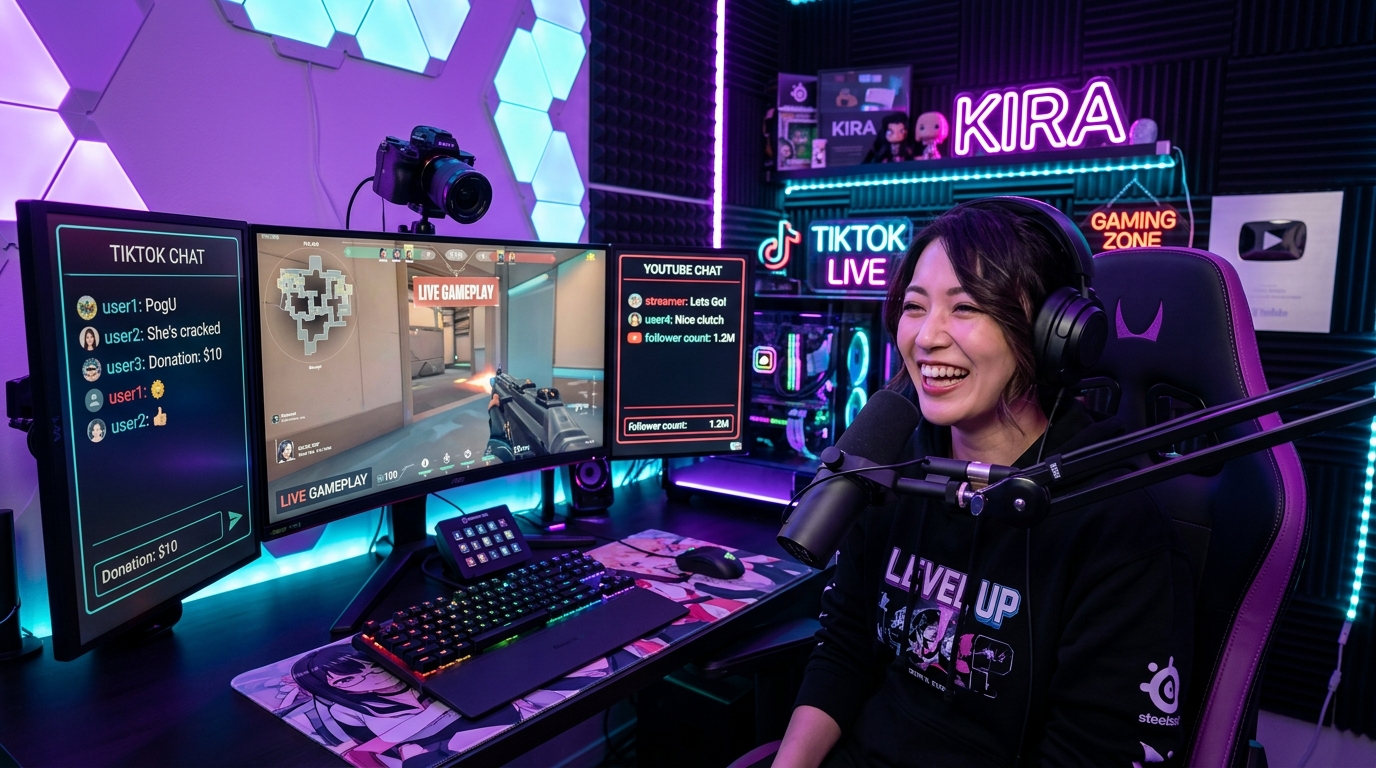
Gaming KOLs can take many forms. Streamers and YouTubers typically create content centered on gameplay, live streams, or gaming experiences. TikTok creators may focus on short videos, gaming tips, and entertaining content. Meanwhile, reviewers, esports players, commentators, and game analysts primarily build their influence through their expertise.
This distinction is crucial when developing a campaign. An RPG might require a reviewer or creator with in-depth knowledge of the genre, while an esports game is better suited for players, streamers, and those who regularly follow tournaments. In other words, there is no single category of KOL that works for all games. An effective choice must start with the specific audience the game aims to reach.
- Should choose a KOL based solely on the number of followers?
Implementing KOL marketing for games requires caution, as this is one of the most common mistakes. An account with millions of followers certainly has the potential to generate broad reach, but that doesn’t guarantee that the people who see the content will be the right gamers. Conversely, a KOL with a smaller community who regularly engages with players of the same genre may generate higher-quality feedback.
In the gaming industry, KOLs should be evaluated based on at least three criteria: relevance to the community, quality of engagement, and ability to create game-related content. After all, the number of followers may only tell part of the story.
2. Why do KOLs in the gaming industry influence players?
- Players are discovering games through content and gaming communities
The way users engage with digital content has made it possible for games to appear more naturally in their online lives. According to DataReportal, Vietnam had 79.8 million Internet users in January 2025, equivalent to 78.8% of the population. At the same time, the number of social media users was reported to be 76.2 million, equivalent to 75.2% of the population. DataReportal also notes that this figure does not necessarily correspond to the number of unique individuals, as one person may have multiple accounts.
This creates an environment where games can be discovered through various touchpoints. Players might come across a game while watching a streamer, stumbling upon a short video, listening to a reviewer’s analysis, or participating in a community discussion.
For KOLs, the advantage lies in the fact that they already have an established relationship with a group of people interested in the content they share. As a result, the game isn’t completely separate from the user’s experience.
- Gameplay footage helps players visualize the game
Ads may inform players about a newly released game, but gameplay footage gives them a clearer picture of what they’ll actually experience.
A livestream can showcase gameplay, the pace of the match, player reactions, and interesting aspects of the game. A review video can delve deeper into the graphics, gameplay mechanics, or the product’s strengths and weaknesses.
This is the unique value of Gaming KOL: they don’t just talk about games—they let the community see how the games are actually played.
Of course, this also means that brands need to accept a certain level of authenticity. If the content simply sounds like a scripted advertisement, viewers will easily notice the lack of authenticity. On the other hand, when a KOL genuinely has their own experiences and perspectives, the content is more likely to spark a conversation within the community.
- A KOL’s credibility can influence viewers’ decisions
A survey by Vero and Decision Lab on the esports community in Vietnam found that 65% of respondents said they had purchased a product recommended by a gaming KOL. The study also showed that the influence of gaming KOLs is not limited to gaming content but can extend to other areas as well.
These figures do not mean that partnering with a KOL will guarantee revenue for a brand. Nor can the survey be used to conclude that KOLs are the sole reason users make purchases. However, it highlights a notable point: gaming KOLs can build enough trust to influence the purchasing behavior of a segment of their audience. That is also why the compatibility between a KOL and a product should take precedence over the KOL’s fame.
3. How to build an effective KOL marketing strategy for games
- Start with the Players, Not the KOLs
A good KOL campaign shouldn’t begin with the question, “Which KOLs are trending right now?” but rather with “Who does the game want to reach?”
Publishers need to identify their target players, the game genre, the platforms they typically use, and the type of content they’re interested in. Only then should they seek out KOLs who already have a natural connection to this community.
For example, if the game targets players who love esports, a professional player or streamer with expertise in the field will have a clear advantage. If the goal is to reach casual players through entertainment content, a creator with storytelling skills and the ability to produce short videos might be a better fit.
- Let KOLs tell stories through real experiences
Effective KOL content doesn’t have to be overly elaborate; what matters most is that viewers feel they are truly getting a glimpse into and understanding of the game. Depending on the objective, brands can have KOLs experience the game during a livestream, create review videos, try out a new feature, participate in events, or play alongside their followers. For esports games, content can expand to include match analysis, behind-the-scenes tournament coverage, or a player’s perspective.
When content stems from real-life experiences, KOLs have more freedom to use their own voice and style. This often feels more natural than imposing a uniform advertising script on every creator.
- Combine multiple KOL groups to both expand reach and engage deeply with the community
A campaign doesn’t necessarily have to rely on just one group of KOLs. KOLs with broad reach can be used during the launch phase to introduce the game to a wider audience. Afterward, KOLs or creators specializing in specific genres can continue to foster engagement within smaller communities.
This approach aligns with the nature of games because a player’s journey doesn’t end after seeing an ad. Players still need to learn about the game, watch gameplay videos, ask others for their opinions, download it, try it out, and decide whether to continue playing. KOLs should therefore be integrated into that entire journey rather than treated as a standalone advertising activity.
- Integrating KOLs with other channels
KOL marketing should not operate in isolation from the overall game marketing strategy. Content created by KOLs can be repurposed for social media, paid ads, community pages, or in-game activities. Content that receives a positive response can also serve as the basis for the brand to develop future content.
It is crucial to ensure message consistency. Players who discover the game through a KOL, search for more information on social media, and then visit the game’s download page should have a seamless experience—rather than encountering a different narrative on each channel.
4. How to measure KOL effectiveness in the gaming industry?
- Shouldn't look only at view counts
View counts are the most visible metric, but they don’t always accurately reflect a campaign’s effectiveness.
If the goal is to increase brand awareness, metrics like reach, views, or brand search volume may be worth considering. But if the goal is to drive players to the game, you’ll need to track additional metrics such as downloads, sign-ups, referral codes, or the number of new players coming from each KOL.
For community-building campaigns, comments, shares, watch time, and the quality of discussions are more meaningful. In other words, metrics should align with the campaign’s goals, rather than trying to use a single number to evaluate all KOL campaigns.
- Tracking the journey from content to players
To determine how much value a KOL truly brings, publishers can use unique links, referral codes, or systems that track installs from each source. This way, companies not only know how many views a video has but can also answer more important questions: How many people downloaded the game? How many signed up? Which KOL’s players are likely to continue playing? What is the cost to acquire a new player?
Especially for games with a revenue model based on in-app purchases, looking at metrics beyond just installs helps evaluate player quality rather than just quantity.
- Community quality is the true long-term value
A KOL may generate millions of views in a single campaign, but the results may not be sustainable if viewers lose interest in the game afterward. Conversely, a creator with a smaller community who consistently produces content, engages with viewers, and maintains a conversation about the game can deliver greater long-term value.
In particular, the Vietnamese gaming market is large but highly competitive. The Ministry of Information and Communications reports that the gaming industry’s revenue in 2024 is estimated at approximately 12,500 billion VND, a slight decrease from the 12,552 billion VND recorded in 2023, while the number of employees has increased by about 4,100 people.
In the mobile gaming market, Gamota’s “Vietnam Mobile Gaming Year-in-Review 2025” report estimates that revenue in 2025 will reach $825 million, with 54 million players. These figures show that the challenge of game marketing is no longer simply about reaching as many people as possible. As the market grows and players have more options, reaching the right community and maintaining their interest becomes increasingly important.
KOLs in the gaming industry are not just advertising faces. They can be streamers who show players how to play, reviewers who help them better understand the product, professional players who build trust through their expertise, or creators who foster ongoing conversations about the game within the community.
The most important point when implementing a Gaming KOL strategy is not to mechanically chase the number of followers. A good campaign must start with the players, select KOLs that align with the community, give them enough space to authentically share their experiences, and measure results based on specific goals.
When properly integrated into a game marketing strategy, KOLs can help a game move beyond mere visibility—from awareness and interest to hands-on experience and active participation in the player community. This is the true long-term value that KOLs can bring to the gaming industry.
💬 Reader Discussion
Share your perspective, questions, or campaign experience.
Đang tải bình luận...