Why Do Players Download Games but Not Stay?
A high number of downloads doesn't necessarily mean a game is growing successfully. From user quality and the initial experience to gameplay, community, and LiveOps, many factors can determine whether players stay or quickly leave.
In this article⌄
Game Retention Vietnam focuses on the challenge of retaining players after they download a game. As the market becomes increasingly competitive, downloads are just the first step; what matters more is getting players to keep coming back, engaging with the game, and creating long-term value.
1. The Vietnam Gaming Market Is Shifting from Downloads to Player Value

Vietnam remains one of the largest mobile gaming markets in Southeast Asia, but the nature of its growth is changing. While download numbers were previously considered one of the key metrics for evaluating the success of a game launch, recent data shows that publishers need to focus more on player quality and the value players generate throughout a game's lifecycle.
According to SocialPeta and Gamota in the 2026 Southeast Asia Mobile Gaming Marketing Trends Report, in the first half of 2026, mobile games in Vietnam reached 76.5 million downloads, down 9.7% year-over-year. However, revenue increased by 7.5% to 177 million USD. Vietnam accounted for 18.3% of Southeast Asia's total mobile game downloads but only 10.6% of the region's in-app purchase (IAP) revenue.
This discrepancy indicates that download volume alone does not fully reflect a product's health. A game may attract a large number of new users but still face issues if the majority of them churn after just a few days.
The 2025 picture also shows that the market remains very large. According to Gamota, Vietnam had approximately 54 million mobile gamers in 2025, with estimated revenue reaching 825 million USD, a 9.16% increase from the previous year. The report also highlights a shift in market trends from quantity-driven growth to quality-driven growth.
As the cost of acquiring players becomes increasingly important, the question is no longer just “How many people download the game?” but “How many actually stay?”
2. What Causes Players to Leave a Game After Downloading It?
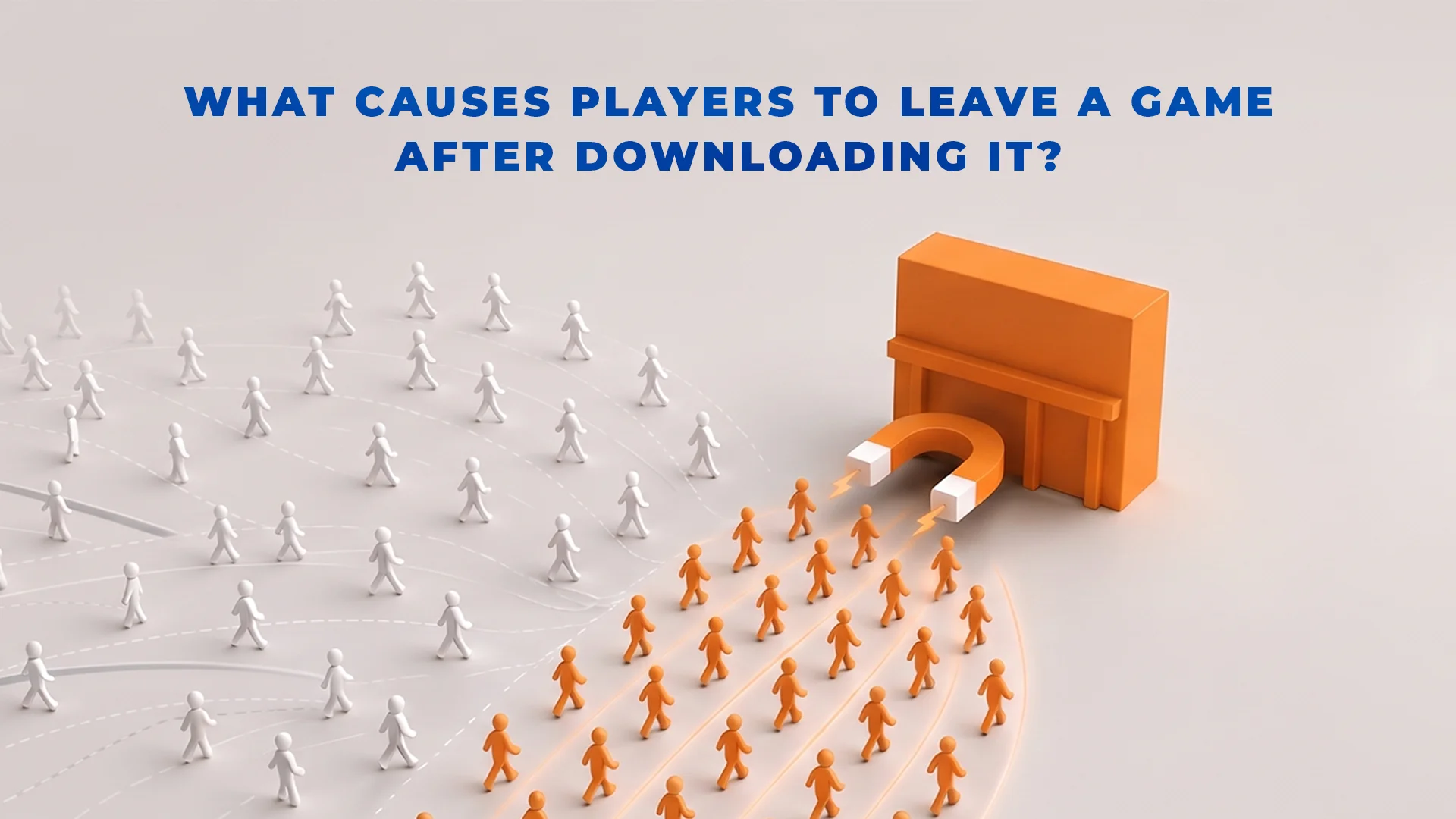
Just because someone installs a game doesn't mean they've become an actual player. They may be drawn in by an ad, a creator's endorsement, or a promotional offer, but the decision to continue playing is only made after experiencing the product.
Data from Adjust on the Vietnamese app market shows that gaming apps in Vietnam in Q1 2025 had a D1 retention rate of 18%, a D7 rate of 5%, and a D30 rate of just 1%. During the same period, the global averages were 27%, 13%, and 2%, respectively. The report also notes that the average session duration for gaming in Vietnam decreased from 28.32 minutes in 2024 to 27.09 minutes in Q1 2025.
These figures are not a universal benchmark for all games, as retention rates depend on genre, monetization model, traffic sources, and the player base. However, the data clearly illustrates the gap between getting users to install a game and getting them to develop a habit of playing it.
Pre-download expectations don't match the actual experience
An advertising campaign may generate hundreds of thousands of downloads, but if the marketing message differs significantly from the actual product, players are likely to leave.
For example, an ad might focus on high-speed combat while the actual gameplay is more tactical; a trailer might showcase an engaging character system that players can't access for hours; or promotional images might be too different from the in-game experience.
In these cases, the problem isn't necessarily with the product itself. Players may leave simply because what they receive doesn't match what they thought they'd downloaded.
Therefore, user quality must be considered alongside the number of installs. A traffic source that brings in fewer users but aligns with the gameplay can generate better D7, D30, and revenue than a source that brings in a large number of installs but experiences high churn.
The first few days don't provide a reason to come back
After installation, players need to quickly understand what makes the game fun, what they're doing, and what they'll get next.
If the onboarding process is too long, the tutorial provides too much information, or players have to wait too long to experience the main gameplay, their initial enthusiasm can easily wane.
This is also why retention is typically tracked at multiple milestones. D1 reflects the ability to get players to return after their first experience; D7 shows whether the product is beginning to foster a habit; and D30 reflects the ability to sustain interest over the long term.
At Vietnam Game Connect 2026, industry experts analyzed this journey in three phases: D1 depends heavily on the Hook, D7 is tied to the Core Loop, and D30 and beyond are more closely related to progression, strategy, the meta, and the depth of the experience.
This also explains why a game can have a relatively strong D1 but still lose the majority of its players in the following weeks.
When a game no longer offers a reason to return
Even if the initial experience is good, players may still leave if they don't have new goals after a few days.
A new character, a new season, new quests, leaderboards, or limited-time events can all serve as reasons to return. But if this content isn't tied to the core experience, it only generates short-lived login spikes rather than fostering long-term habits.
Gamota's Vietnam Game Industry Monthly Report – May 2026 shows that while midcore game downloads have declined, midcore revenue continues to rise. Gamota attributes this result to effective LiveOps management, a stable player community, and efficient monetization loops.
Thus, the challenge of player retention isn't just about adding more content. More importantly, it's about whether that content provides a strong enough reason for players to return.
3. What Factors Influence Player Retention?

When looking at the entire journey from installation to when a player leaves the game, it becomes clear that retention isn't the result of any single feature. It stems from a combination of gameplay, progression, community, and how well the product aligns with the player's needs.
Gameplay must be engaging enough to become a habit
Players may be drawn to a game by advertising, but they stay because of the gameplay.
A well-designed gameplay loop should create a desire to try more, make progress, or explore. For casual games, this might be the feeling of “just one more round.” For RPGs, motivation may come from leveling up characters, unlocking content, or uncovering the storyline. For competitive games, it's about rankings, skill, and the thrill of beating opponents.
Therefore, there is no one-size-fits-all formula for every product. Publishers need to identify which aspect of the core loop keeps players coming back, while also determining when that loop begins to lose its appeal.
Community creates more reasons to stay
In games with social elements, the community can become an integral part of the product experience itself.
Guilds, clans, friends, leaderboards, tournaments, or group activities keep players coming back not only for the game itself but also for the relationships they've formed within it.
This is also why community marketing shouldn't be limited to the launch period. A thriving community can generate content, conversations, and motivation to return even when the game doesn't have a major update.
LiveOps continues to provide new reasons for players to return. However, more events do not necessarily equate to better retention. An effective event must align with player progression and behavior; if it merely creates a short-lived surge in logins and then ends, the impact will be difficult to sustain.
Localization must go beyond simply translating the game
A product with solid gameplay can still struggle if players feel it isn't truly tailored to their market.
Localization, therefore, isn't just about translating the interface into Vietnamese. Character design, visuals, content, messaging, and familiar cultural elements can all influence how players perceive the game.
Gamota's May 2026 report noted that products with cultural fit, a connection to soccer, or nostalgic gameplay memories are more likely to gain traction in Vietnam.
In the 2026 Southeast Asia Mobile Game Marketing Report, SocialPeta and Gamota also emphasized the role of localization as the market shifts toward competition based on quality. Notably, the rate of effective creatives across six different markets in Vietnam was only 31% for RPGs and 34% for strategy games, indicating that using the same creative across multiple markets is not always effective.
Given the importance of player retention, this level of customization is even more critical. If players feel that a game was originally developed for another market and then simply translated for release in Vietnam, it is very difficult to foster a sense of long-term loyalty.
4. How Can We Improve Player Retention?
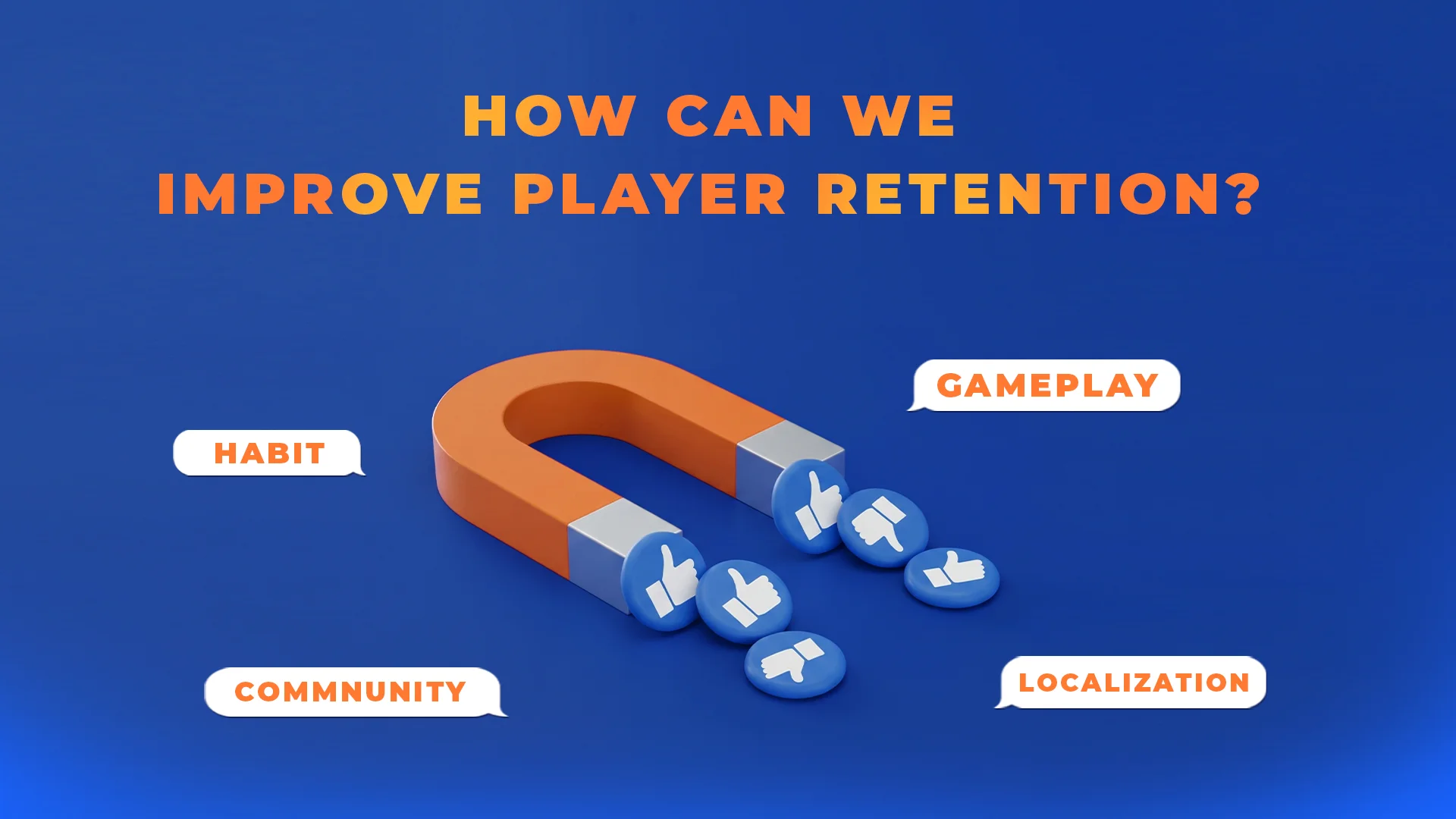
Based on the factors above, optimization shouldn't start by simply adding a lot of rewards or events. First, publishers need to identify where players are churning and which aspects of the experience are causing it.
One approach could start by tracking cohorts at D1, D3, D7, D14, and D30, then identifying the point at which the number of play sessions begins to drop sharply. Once the drop-off point is identified, players can be segmented by acquisition source, device, behavior, activity level, and spending potential.
From there, the product team can revisit the onboarding process, core loop, progression, difficulty, reward system, and LiveOps schedule to identify the root cause.
It's important not to view retention in isolation from acquisition and monetization.
If D1 is low, the problem may stem from traffic quality or creative assets. If D1 is strong but D7 drops sharply, the core loop or progression may not be engaging enough. If D7 is stable but D30 declines, the game may lack depth, long-term content, or community engagement.
Retention and monetization must be viewed together
Strong retention creates more opportunities for players to engage with battle passes, in-game items, characters, or other content with conversion potential. However, that does not mean that simply extending playtime will increase revenue.
According to Gamota Vietnam's Mobile Gaming Year-in-Review 2025, approximately 7–10% of mobile gamers in Vietnam make in-game purchases, while the high-spending segment accounts for only about 2–3%.
This shows that the value lies not in turning every player into a payer, but in understanding each group and creating experiences tailored to them.
An event may boost the number of login sessions but doesn't generate much value if players simply log in to claim rewards and then leave. Conversely, content with a smaller player base that fosters longer playtime, strong engagement, and a high likelihood of spending can still be more valuable.
Therefore, instead of trying to optimize revenue from the very beginning, publishers should follow the sequence: Core Loop → Retention → Monetization. When the experience is good enough that players want to stay, the opportunity to create long-term value is also greater.
The Vietnamese gaming market is entering a phase where player value is just as important as the number of downloads. Data from the first half of 2026 shows that mobile game downloads fell by 9.7%, but revenue still rose by 7.5% to 177 million USD, indicating that growth no longer comes solely from attracting new users.
To retain players for longer, publishers need to consider the entire journey: acquisition → onboarding → gameplay → progression → community → LiveOps → monetization. Each stage can be a factor that keeps players engaged or causes them to leave.
A game may attract millions of downloads, but if it fails to provide a reason for players to return, most of its potential value will be lost shortly after the initial days.

Need to research players and optimize retention? Contact ANBU to gain insights and build a tailored strategy.
💬 Reader Discussion
Share your perspective, questions, or campaign experience.
Đang tải bình luận...